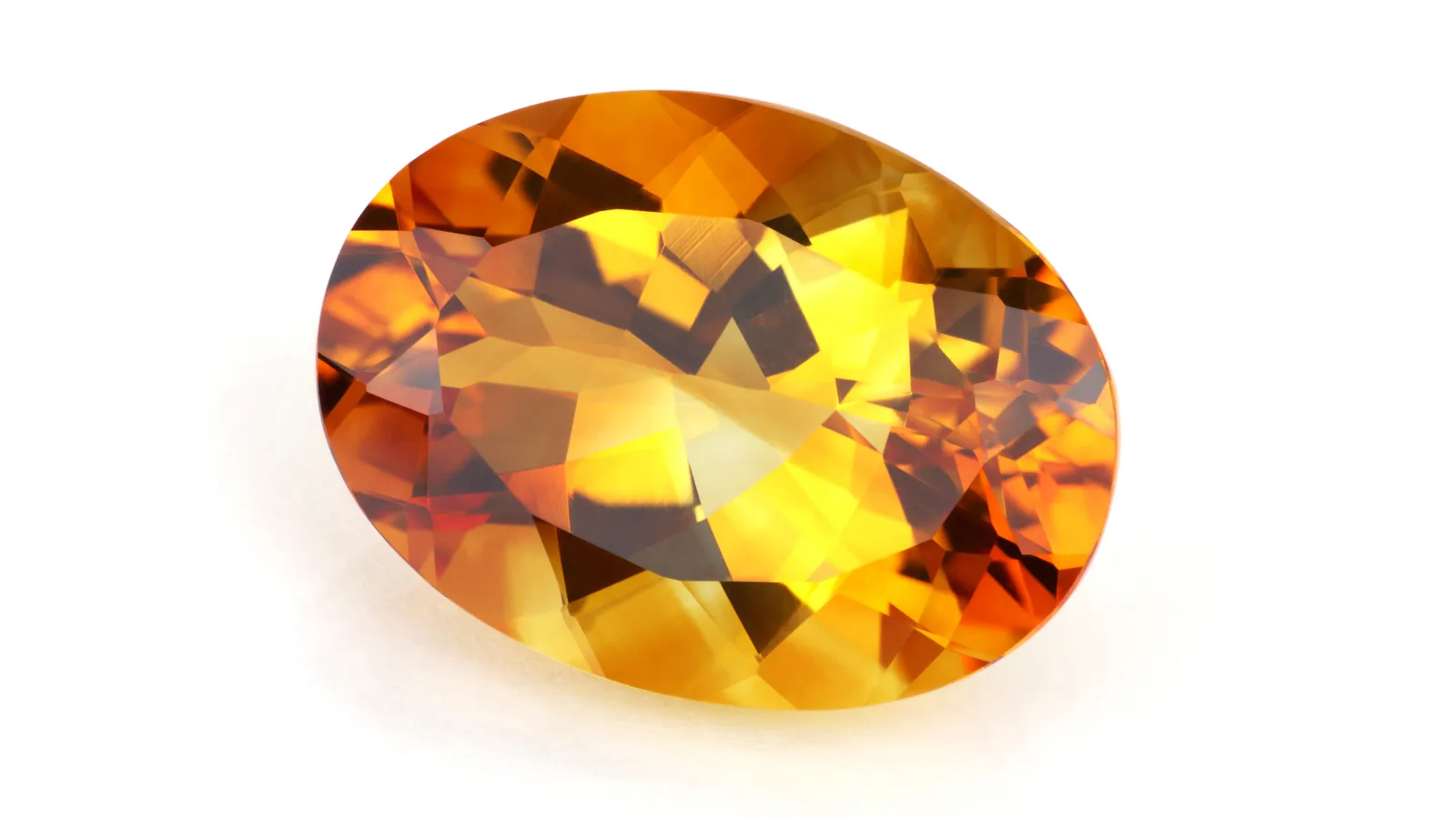
Short answer: citrine is the yellow-to-orange variety of quartz. Traces of iron give it that warm color. Natural citrine is rare, so most citrine you’ll see in stores is amethyst (purple quartz) that has been heat-treated to turn golden. It’s a November birthstone, it’s affordable, and it’s durable enough for most jewelry.
At a glance
| Property | Citrine |
|---|---|
| Mineral | Quartz |
| Color | Pale yellow to deep orange-brown |
| Cause of color | Traces of iron |
| Hardness (Mohs) | 7 |
| Common treatment | Heating amethyst or smoky quartz |
| Birthstone | November (with topaz) |
| Anniversary | 13th |
| Price level | Affordable |
What makes citrine yellow?
Citrine gets its color from small amounts of iron in the quartz crystal. The color ranges from light lemon yellow to rich orange and reddish brown. GIA notes that citrine’s tawny shades once led people to confuse it with topaz.
Is most citrine heat-treated?
Yes. According to GIA, most citrine on the market comes from heat-treating amethyst. Natural citrine, which formed yellow in the ground, is rare.
Here’s what that means for you:
- Heat-treated citrine is still real quartz. It’s not fake or synthetic.
- The color is generally stable in normal wear.
- Natural citrine is rare. If it matters to you, ask the seller whether a stone has been treated.
Brazil is a major source, where large amethyst deposits are heated to produce citrine. Bolivia is known for ametrine, which shows both amethyst purple and citrine yellow in one stone.
Citrine colors and what they’re worth
| Color | Description | Value |
|---|---|---|
| Pale lemon | Light yellow, very bright | Lower |
| Golden yellow | Even, saturated yellow | Good |
| Deep orange / “Madeira” | Orange to reddish orange | Popular, often priced higher |
| Brownish | Muddy or smoky tone | Lower |
Value also depends on:
- Clarity: most faceted citrine is eye-clean, so visible inclusions lower value.
- Cut: a well-cut stone looks bright and even; a poor cut has dark or washed-out areas.
- Size: citrine comes in large sizes without a big jump in price per carat, which makes it popular for statement pieces.
Citrine is generally one of the more budget-friendly colored gems, but prices vary by color, cut and seller.
Citrine vs similar yellow gems
| Gem | Hardness | How it compares |
|---|---|---|
| Citrine | 7 | Affordable, warm yellow to orange |
| Yellow topaz | 8 | Harder, usually more expensive |
| Yellow sapphire | 9 | Much harder, higher price |
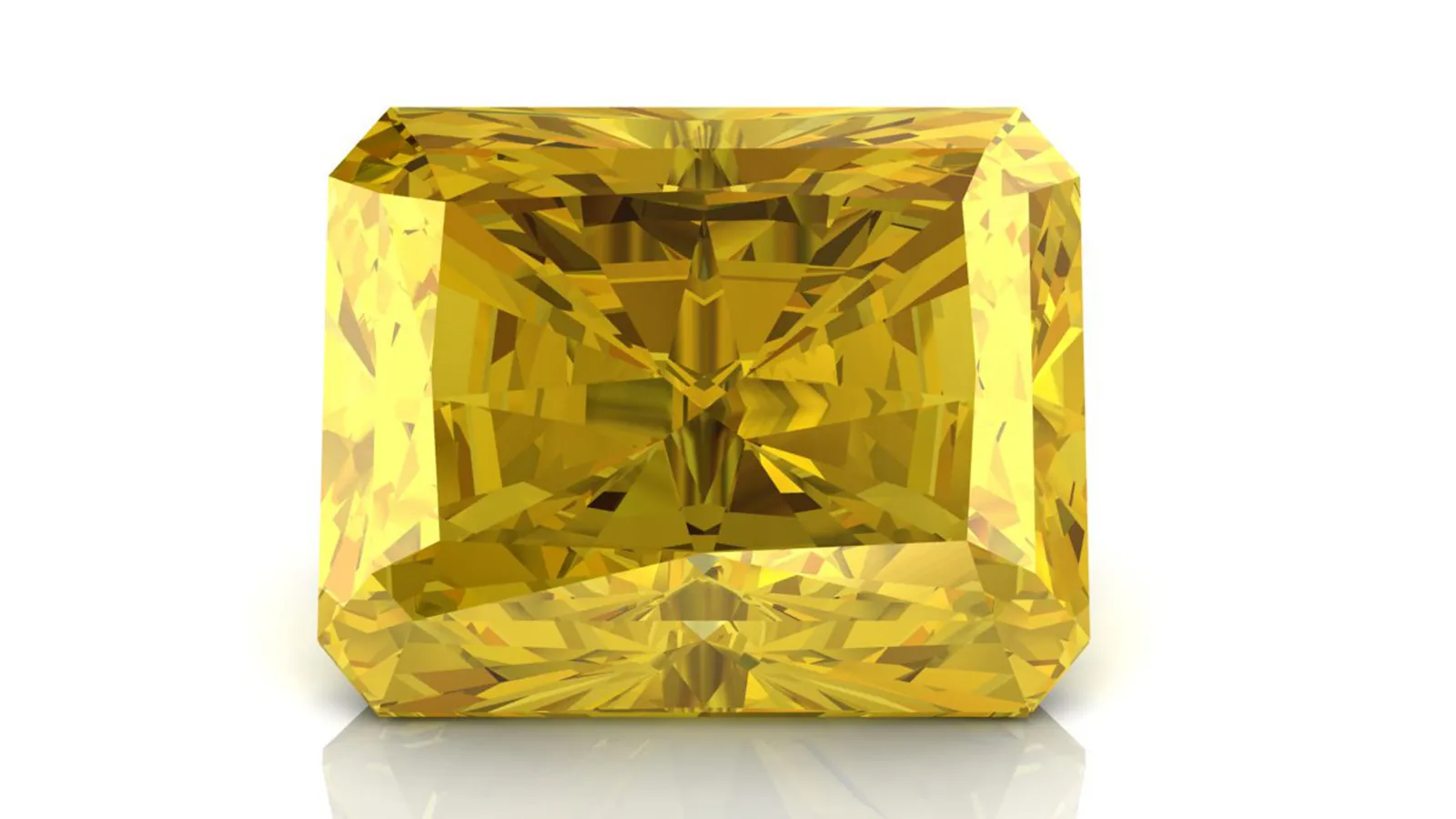
| Yellow diamond | 10 | Hardest, far more expensive |
If you’re comparing yellow stones, see how to tell a yellow diamond from a yellow sapphire. For more warm-toned gems, browse our list of orange gemstones.
Is citrine good for rings?
Citrine works well in rings, earrings and pendants. At 7 on the Mohs scale, it’s harder than many everyday materials, but it can still chip if it hits a hard surface. For rings you wear daily:
- choose a protective setting, like a bezel or a halo
- take it off for the gym, sports and heavy work
- avoid very pointed cuts on a ring you’ll knock around
How to care for citrine
- Clean it with warm water, a little mild soap and a soft brush. Here’s whether citrine can go in water.
- Avoid high heat and sudden temperature changes, which can affect color or crack the stone.
- Keep harsh chemicals away, including household cleaners and chlorine.
- Store it separately so harder gems like sapphires and diamonds don’t scratch it.
Citrine and amethyst
Because most citrine starts life as amethyst, the two are closely related. If you’re shopping for amethyst too, read how to tell if amethyst is real.
Frequently asked questions
Is citrine a real gemstone?
Yes. Citrine is a natural variety of quartz. Most citrine sold today is natural amethyst or quartz that has been heated to turn it yellow or orange.
Is citrine expensive?
Generally no. It’s one of the more affordable colored gems, even in larger sizes. Deep, even color and clean stones cost more.
Can you wear citrine every day?
Yes, with some care. At 7 on the Mohs scale it handles daily wear better than many gems, but it can still chip or scratch if knocked against hard surfaces.
What is the difference between citrine and yellow topaz?
They’re different minerals. Citrine is quartz; topaz is harder (8 on the Mohs scale) and usually costs more. The two were often confused in the past because of their similar color.
What is ametrine?
Ametrine is quartz that’s part purple amethyst and part yellow citrine in the same crystal. It’s best known from Bolivia.