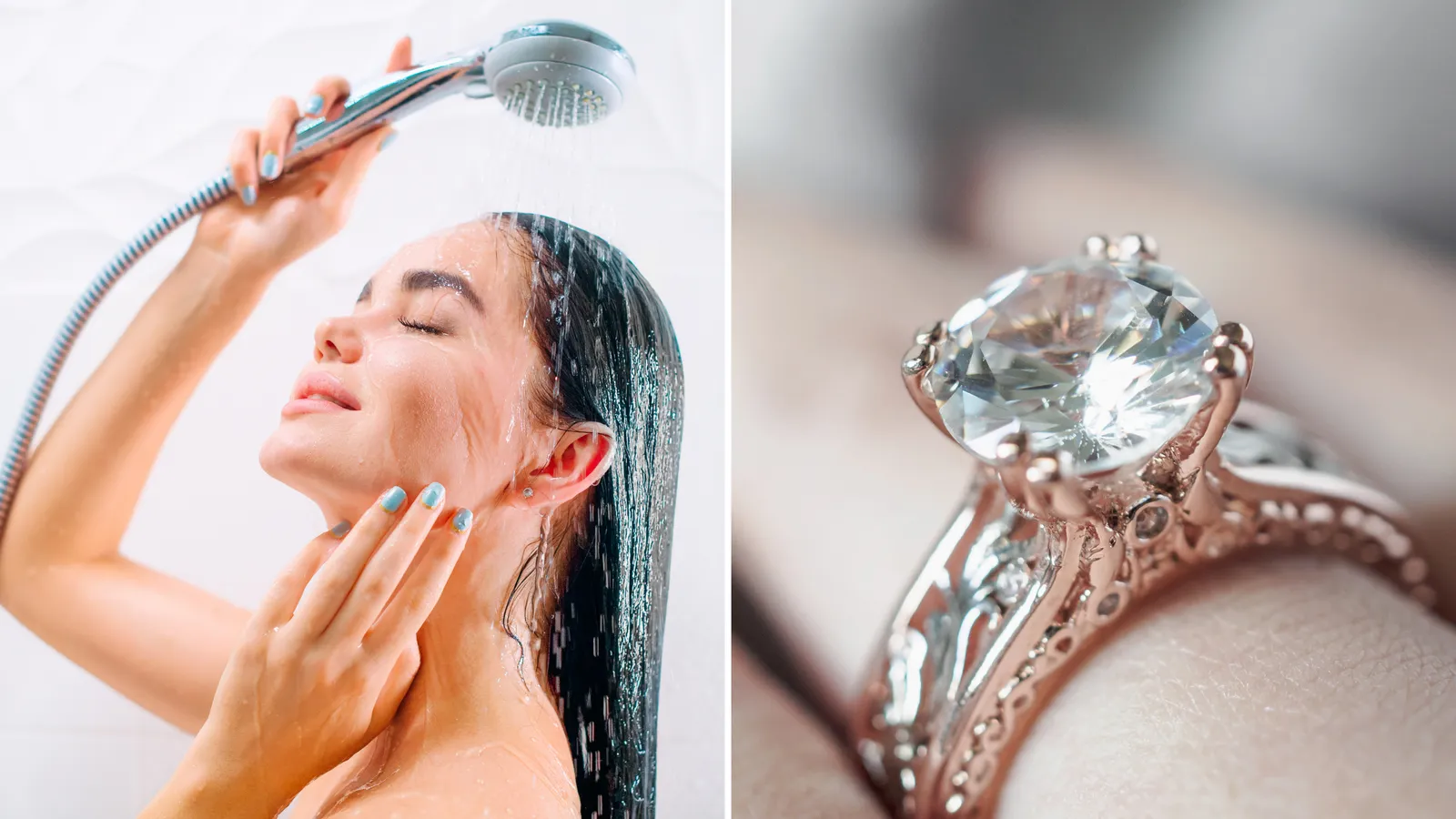
Short answer: the diamond itself won’t be harmed by a shower. Diamonds are the hardest natural material and water doesn’t affect them. The real problems are soap and shampoo film that dulls the sparkle, slippery fingers that let a ring fall down the drain, and wear on the metal setting over time. Taking it off before you shower is the safer habit.
At a glance
| Risk in the shower | How serious? | Why |
|---|---|---|
| Damage to the diamond | Very low | Water, soap and normal heat don’t hurt diamond |
| Dull, cloudy look | High | Soap, conditioner and oils coat the stone |
| Losing the ring | Moderate | Wet, soapy fingers and open drains |
| Wear on the setting | Low to moderate | Buildup traps grime; harsh products can affect plating |
| Pools and hot tubs | Higher | Chlorine is harsh on gold alloys and solder |
Why your diamond looks dull after showering
GIA notes that diamonds readily attract grease. That means soap, shampoo, conditioner, body wash and your skin’s natural oils cling to the stone, especially the underside where light is supposed to bounce back up through the top.
Once the bottom of a diamond is coated, less light comes back to your eye, and the stone can look cloudy or “sleepy.” It isn’t damaged, just dirty.
The worst offenders:
- Conditioner and moisturizing body wash, which are designed to leave a film
- Bar soap residue, which builds up between prongs
- Hard water, which adds mineral spots
Your ring can go down the drain
Water and soap make fingers slippery, and rings slide off more easily, especially if yours is a little loose or your hands are cold. A shower drain is one of the worst places to drop a ring.
If your ring spins or slips often, read how to keep your ring from spinning or ask about making a ring smaller.
What about the metal and setting?
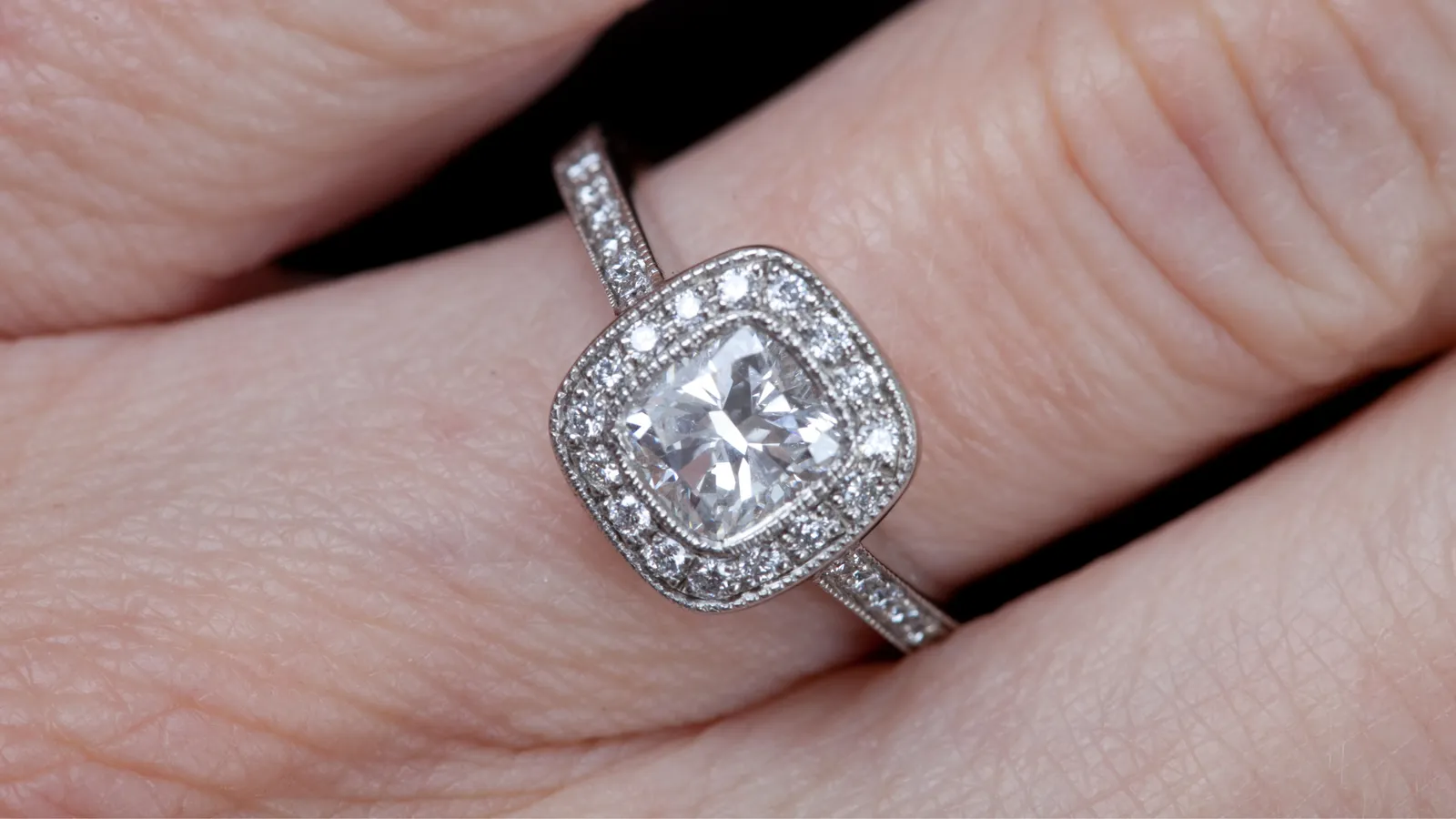
- Gold and platinum aren’t harmed by shower water, but soap buildup collects around prongs and under the gallery.
- White gold is usually rhodium-plated, and frequent exposure to products and scrubbing can wear plating a bit faster. See how long rhodium plating lasts.
- Loose prongs are a bigger worry than water. If a prong is already weak, catching it on a towel or hair can bend it.
The same logic applies to other jewelry. See our guide to showering with a gold chain.
Take it off for pools and hot tubs
Chlorine is much harsher than shower water. Over time it can attack the non-gold metals in an alloy and weaken solder joints, which is how stones get lost. Leave your ring in a safe spot before swimming.
When to take off your diamond ring
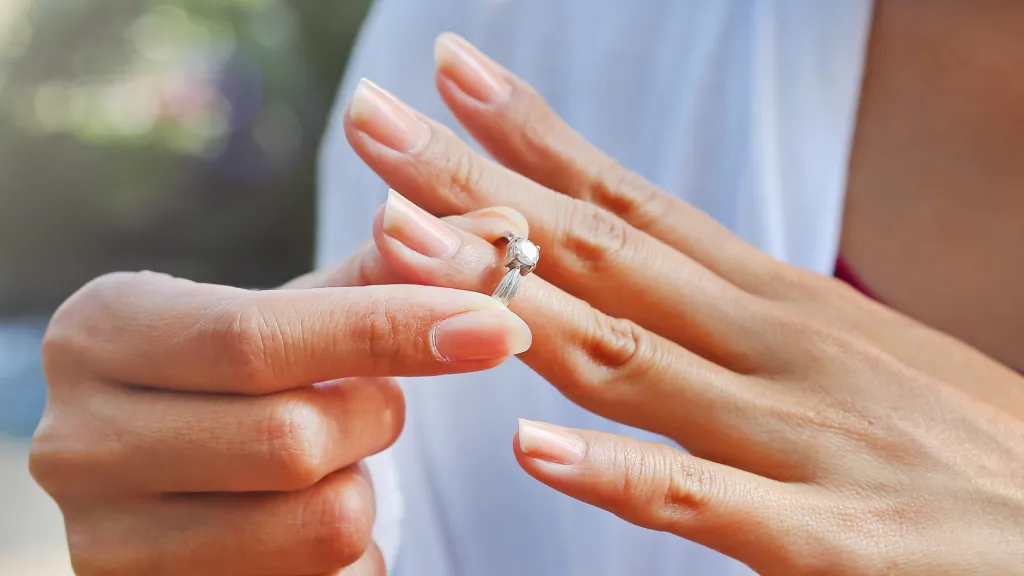
Good times to remove it:
- Showering and bathing
- Swimming, hot tubs and saunas
- Applying lotion, sunscreen or hair products
- Cleaning with bleach or household chemicals
- Gardening, workouts and heavy lifting
- Cooking with dough or greasy food
Always put it somewhere safe, like a ring dish away from the sink, not on the edge of a basin.
How to clean a diamond ring
GIA suggests soaking diamond jewelry in warm water with a few drops of mild dish soap, then gently brushing it. It also warns against chlorine bleach and abrasives like household cleansers and toothpaste.
- Soak the ring in warm water with a few drops of mild dish soap for several minutes.
- Brush gently with a soft toothbrush, especially under the stone.
- Rinse in a bowl of clean water (not over an open drain).
- Pat dry with a lint-free cloth.
Do this every week or two if you wear the ring daily, and have a jeweler professionally clean and check it once or twice a year.
How to tell if your ring needs attention
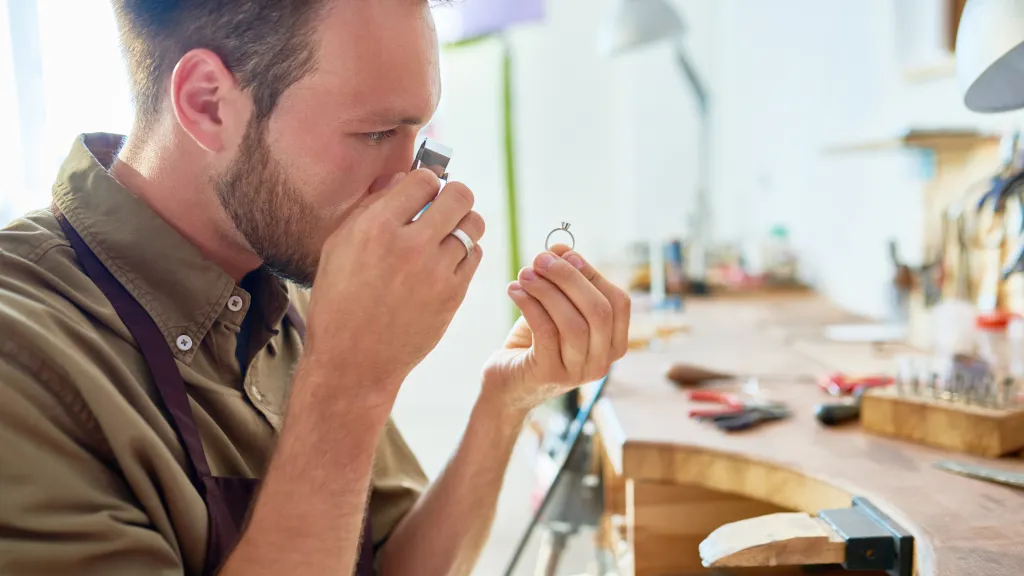
Signs it’s time to see a jeweler:
- The diamond moves or rattles when you tap the ring gently near your ear
- A prong snags on clothing or looks flattened or bent
- You can see a chip on the stone’s edge
- The band is thin, cracked or out of round
Catching a loose prong early is much cheaper than replacing a lost diamond.
Frequently asked questions
Will shower water make my diamond cloudy?
Water alone won’t. The cloudy look comes from soap, shampoo, conditioner and body oils coating the diamond, especially underneath. A proper clean brings the sparkle back.
Is hard water bad for diamond rings?
Hard water can leave mineral spots on the metal and stone, which adds to the dull film. It won’t damage a diamond, and regular cleaning removes it.
Can I wear my lab-grown diamond ring in the shower?
The same advice applies. Lab-grown diamonds have the same hardness and chemistry as mined diamonds, so the risks are the setting, soap film and losing the ring, not the stone.
Should I take my ring off to wash my hands?
Quick handwashing is usually fine, but take it off near open drains if it’s loose, and avoid getting hand lotion and sanitizer gel into the setting.